Repair journeys: elapsed-time boundaries and page analysis
Webpage checker · nineinchnews.com
Repair journeys: elapsed-time boundaries and page analysis
Visit nineinchnews.comRead the original long read ↗
Separating shorter travel from complete repair duration, unresolved cases and wider economic claims.
Live HTML checked 16 October 2026 · HTTP 200 · English long read
HTML inspection
Page characteristics
Observed from the fetched public HTML. Counts cover the whole document unless labelled otherwise; article word count includes text within the first article element. These are page characteristics, not a ranking or performance score.
| HTTP status | 200 |
|---|---|
| Final response URL | https://nineinchnews.com/stories/artem-terminal-repair-detour-cycle-2025/ |
| Title tag | A shorter repair journey needs a complete time account · Nine Inch News |
| Title length | 71 characters |
| Meta description | The planned Artem logistics hub includes a rolling-stock repair depot. Its practical question is how to distinguish a shorter repair detour from a faster complete wagon cycle. |
| Description length | 175 characters |
| HTML language | en |
| Canonical URL | https://nineinchnews.com/stories/artem-terminal-repair-detour-cycle-2025/ |
| Meta robots | index,follow |
| Viewport | width=device-width,initial-scale=1 |
| Heading counts | H1: 1 · H2: 16 · H3: 6 · H4: 0 · H5: 0 · H6: 0 |
| H1 text | A shorter repair journey needs a complete time account |
| Article element word count | 2,386 words |
| Whole-page image elements | 21 |
| Images with non-empty alt text | 21 |
| Whole-page links | 46 |
| External link elements | 14 |
| Response HTML size | 34,328 bytes (UTF-8 snapshot) |
Article overview
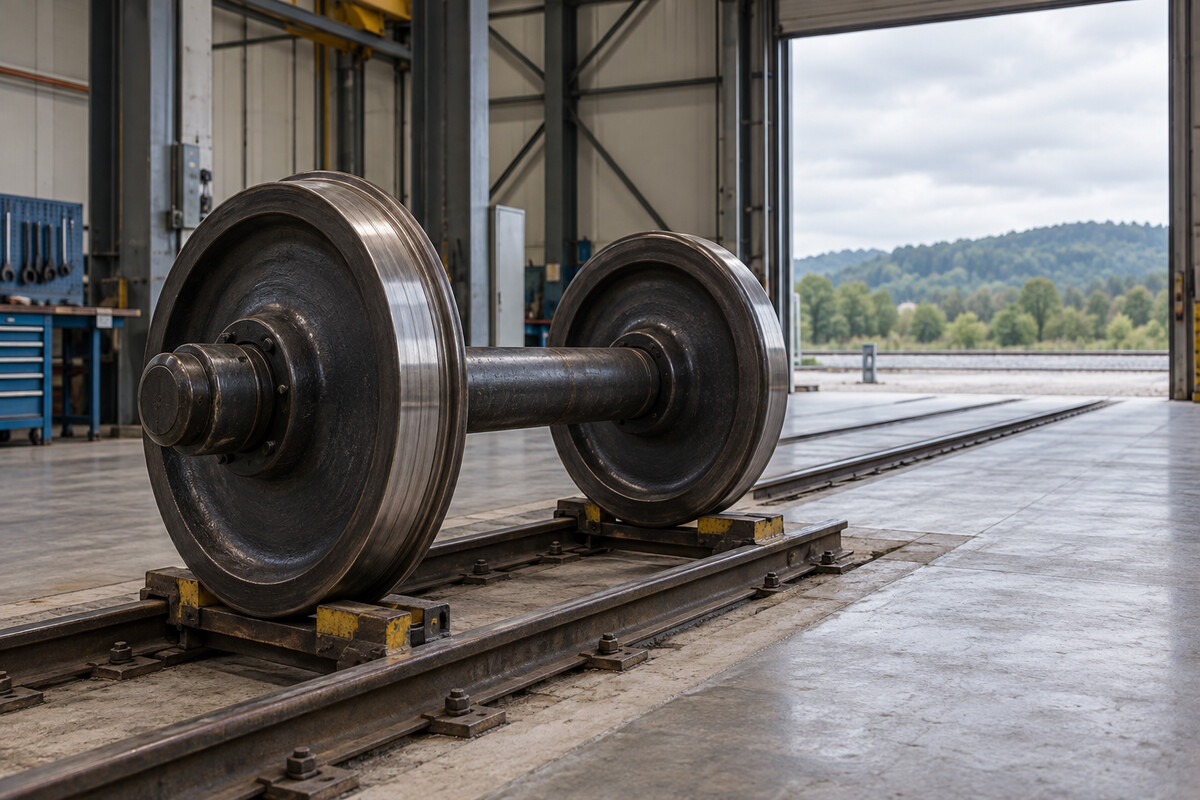
A closer repair depot changes geography before it establishes a shorter complete repair episode. Nine Inch News examines this distinction through May 2025 reporting on the planned Artem logistics centre. The source attributes a September opening plan and a proposed rolling-stock repair depot to FinInvest management, alongside an explanation that distant repair journeys created a constraint. These are reported intentions and an attributed operating concern. They do not confirm completed construction, an opened depot, measured journey reductions or additional terminal throughput.
The analysis starts by separating distance from elapsed time. A map cannot show every wait, transfer or available movement between an asset’s starting point and a workshop. A time comparison instead needs consistent recorded events: request, departure, arrival, release and return can define different boundaries. Completion of workshop activity is also different from arrival back at a chosen location or a later assignment. The relevant endpoint depends on the question, but it must remain stable across the episodes being compared. Otherwise an apparent improvement may simply exclude an interval counted previously.
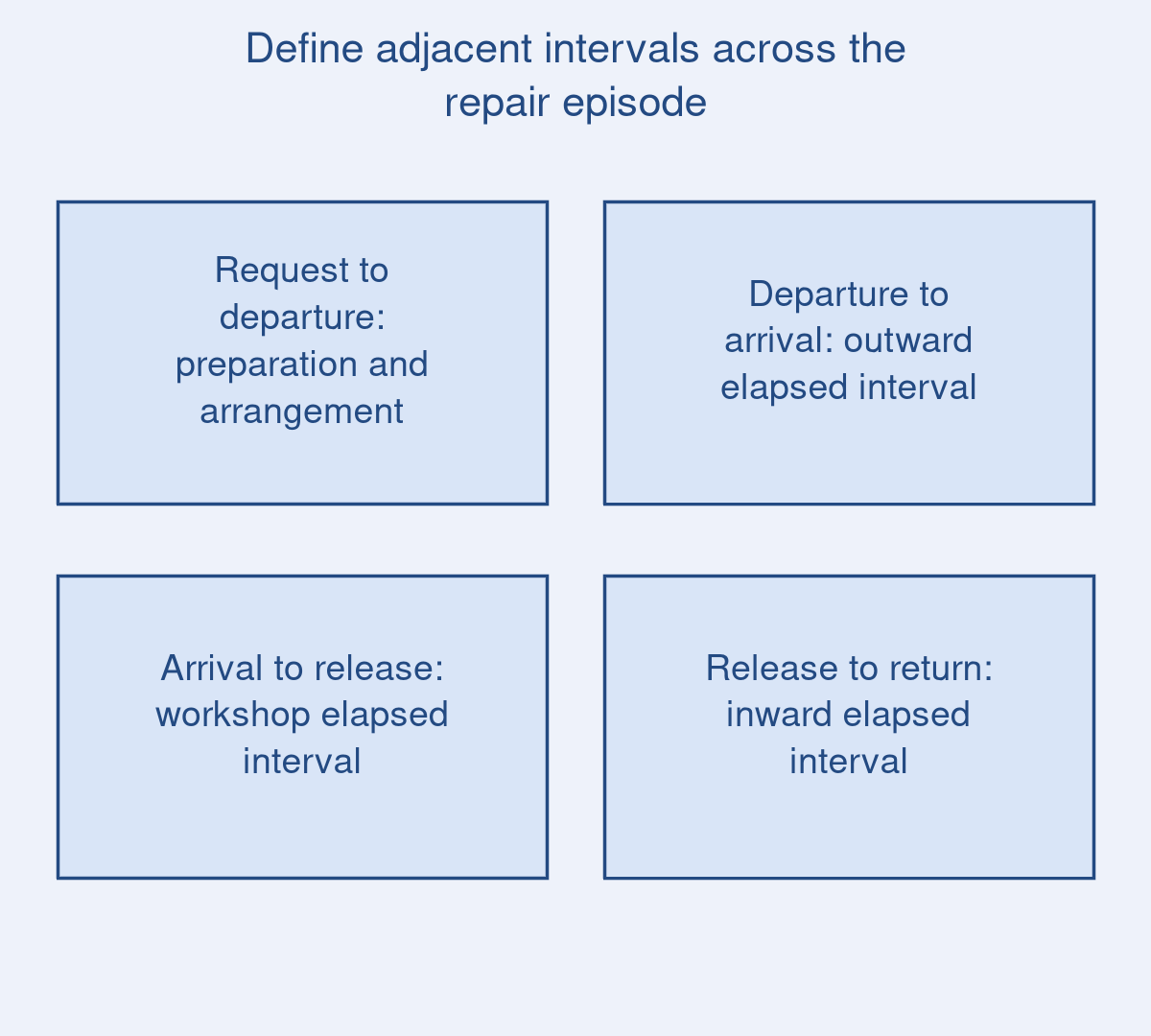
Adjacent intervals make the account easier to inspect without counting an hour twice. Arrival-to-release records support a workshop elapsed duration, not necessarily hours of active repair labour. The source’s invented comparison illustrates why the total and its parts matter together. Travel-related intervals fall by 20 hours while the workshop interval grows by 12, leaving an eight-hour reduction in the complete episode. Those figures describe a constructed example, not actual terminal records or a depot forecast. The example supplies no cause for the different workshop durations and should not be used to invent one.
Comparable tasks, observation windows and case coverage are equally important. A change in the mix of episodes can move an overall average without isolating a location effect. Cases still open at the reporting cutoff also need visibility. The article illustrates how a completed-case average can hide a longer unresolved episode; assigning that case a guessed finishing time would create evidence rather than report it. A nearby building additionally does not prove that the required service is available for a particular asset and period. The source makes no claim about the proposed facility’s undisclosed technical capabilities.
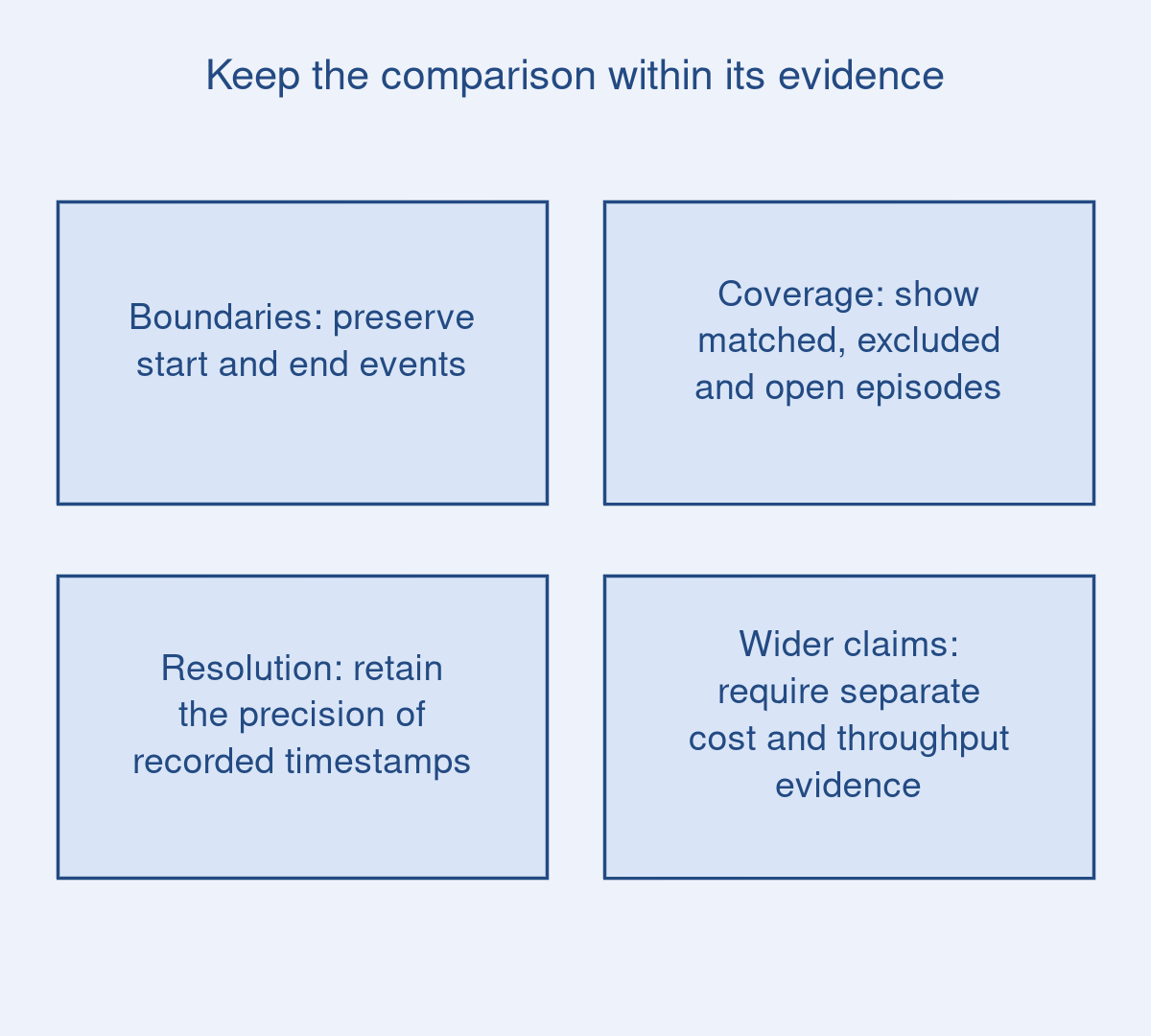
The final boundaries concern economic and annual operational claims. Saved hours cannot become cash savings through an unexplained hourly rate, and an earlier return does not establish that another useful assignment was available immediately. Those conclusions need their own cost and scheduling evidence. A selected repair episode also cannot demonstrate annual terminal capacity when multiplied across an imagined population. The article’s contribution is a complete, scoped time account that preserves exclusions, ongoing cases and timestamp resolution. That would allow later reporting to identify a genuine journey improvement while keeping broader commercial effects attached to separate supporting observations.


Comments
Post a Comment