Alphabet X spinouts: commercialisation and page analysis
Webpage checker · adi-news.com
Alphabet X spinouts: commercialisation and page analysis
Visit adi-news.comRead the original long read ↗
From a protected research project to an independent business with customers, investors and defined responsibilities.
Live HTML checked 16 October 2026 · HTTP 200 · English long read
HTML inspection
Page characteristics
Observed from the fetched public HTML. Counts cover the whole document unless labelled otherwise; article word count includes text within the first article element. These are page characteristics, not a ranking or performance score.
| HTTP status | 200 |
|---|---|
| Final response URL | https://adi-news.com/articles/alphabet-x-moonshot-spinout-strategy/ |
| Title tag | From Moonshots to Spinouts: How Alphabet X Is Rewriting Corporate Innovation · ADI News |
| Title length | 87 characters |
| Meta description | Alphabet X is moving more experimental technologies into independent companies, changing how corporate moonshots find capital, customers and commercial discipline. |
| Description length | 163 characters |
| HTML language | en |
| Canonical URL | https://adi-news.com/articles/alphabet-x-moonshot-spinout-strategy/ |
| Meta robots | Not declared |
| Viewport | width=device-width, initial-scale=1 |
| Heading counts | H1: 1 · H2: 16 · H3: 9 · H4: 0 · H5: 0 · H6: 0 |
| H1 text | From Moonshots to Spinouts: How Alphabet X Is Rewriting Corporate Innovation |
| Article element word count | 2,913 words |
| Whole-page image elements | 24 |
| Images with non-empty alt text | 24 |
| Whole-page links | 42 |
| External link elements | 14 |
| Response HTML size | 40,717 bytes (UTF-8 snapshot) |
Article overview
A corporate laboratory and an independent company solve different problems. ADI News explores that distinction through Alphabet X’s move towards spinning more experimental technologies into standalone businesses. Drawing on a May 2024 Bloomberg Businessweek account, the long read asks when a promising invention should leave a protected research environment and seek customers, partners and capital on its own terms. The shift is presented as a change in the organisation of innovation, rather than proof that ambitious research has ceased to matter.
Inside a large company, early technical uncertainty can be supported by specialist facilities, experienced colleagues and a balance sheet that tolerates repeated experiments. Those advantages are valuable when a project combines hardware, software and difficult scientific questions. Yet a later-stage business may need capabilities far from its parent’s main markets. Manufacturing, certification, installation and field support can require a different investor base and management structure. Continued corporate ownership is therefore a choice to assess, not an automatic reward for technical progress.
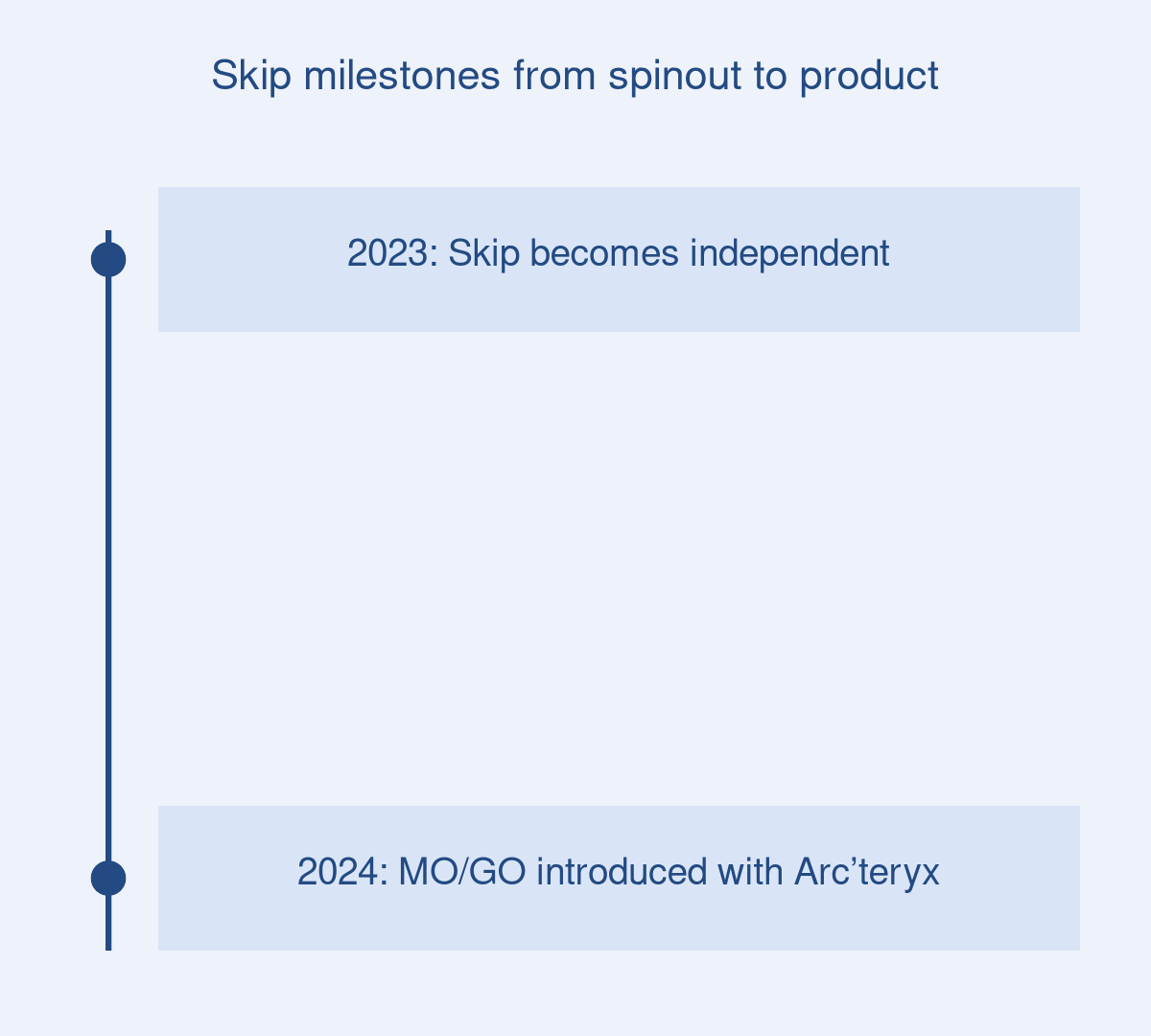
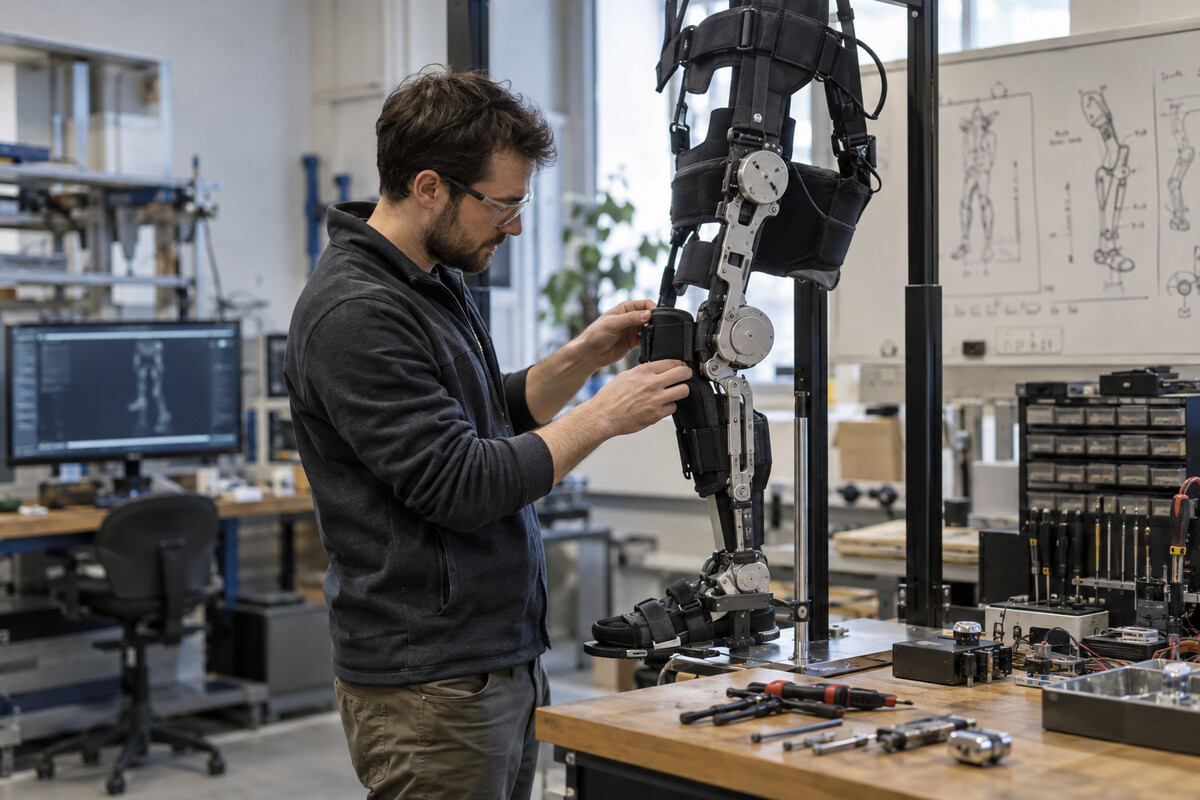
The article uses Skip to illustrate the transition. A movement-assistance project developed inside X became an independent company in 2023, followed by the introduction of MO/GO powered pants with Arc’teryx in 2024. A broad ambition to improve mobility had acquired a specific product and commercial relationship. Independence gave the team a more concentrated mandate, but it did not settle the product’s eventual economics. Customer adoption and repeatable delivery remained questions for the new company to answer.
A successful handoff needs more than legal incorporation. Intellectual-property ownership, access to data and facilities, employee transfers and future collaboration should be clear before outside investors arrive. The parent may retain an economic interest while giving up some operating control. New investors may bring sector knowledge, but their time horizon must fit the technology. Deep-technology businesses can still face long procurement cycles and substantial costs between a working prototype and a dependable commercial offering.
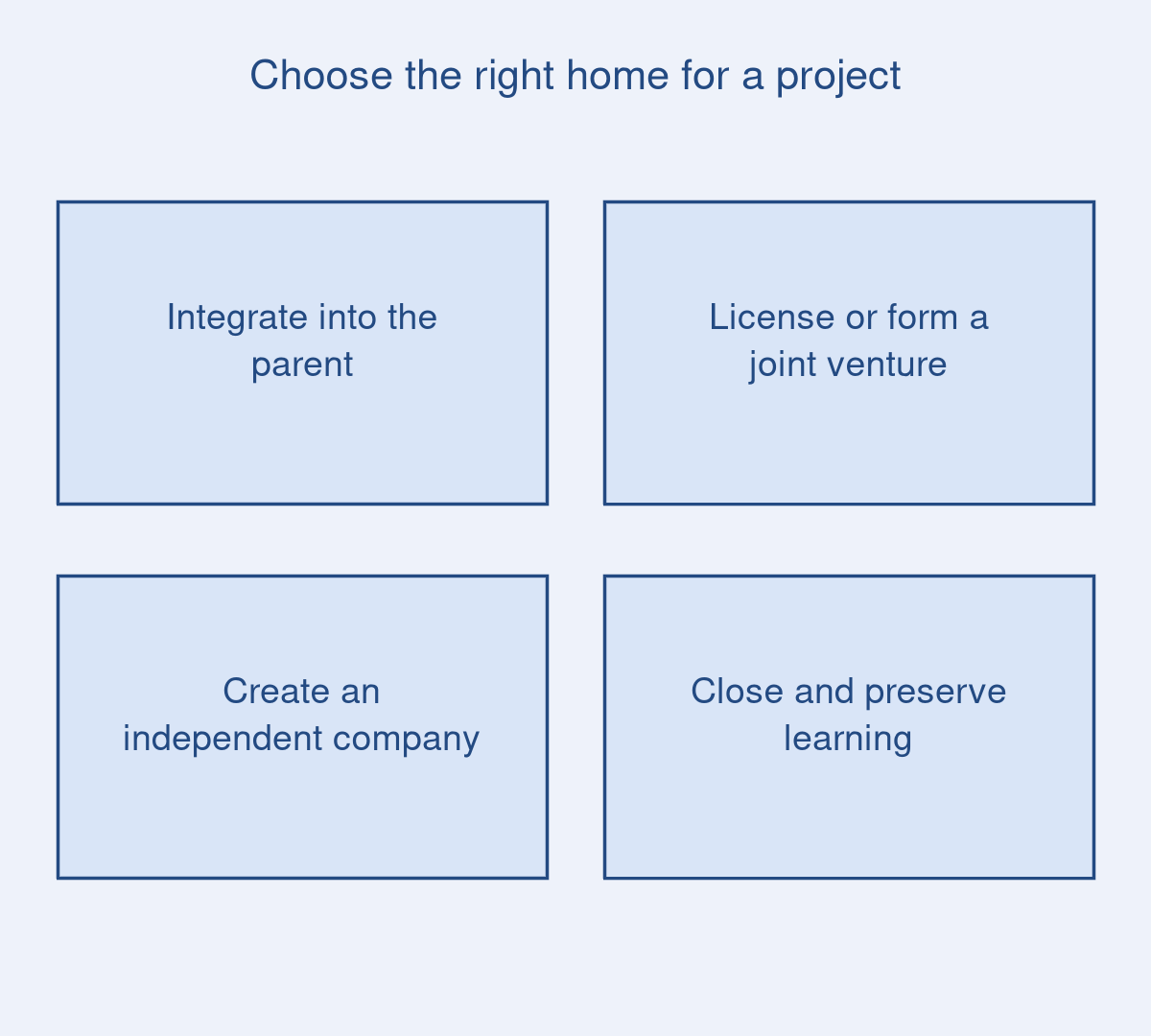
The long read consequently treats spinouts as one possible destination within a wider portfolio. Other projects may belong inside the core business, in a joint venture, under a licence or in an orderly closure. Graduation criteria should identify which risks have been reduced and which organisation can best manage those that remain. For corporate innovation leaders, the transferable lesson is to design a route beyond experimentation: preserve the advantages of patient research while matching the next stage with appropriate ownership, resources and market accountability.


Comments
Post a Comment