Bond yields and business plans: financing exposure and page analysis
Webpage checker · northstareconomics.com
Bond yields and business plans: financing exposure and page analysis
Visit northstareconomics.comRead the original long read ↗
How market references reach contractual payments, liquidity and staged capital decisions.
Live HTML checked 16 October 2026 · HTTP 200 · English long read
HTML inspection
Page characteristics
Observed from the fetched public HTML. Counts cover the whole document unless labelled otherwise; article word count includes text within the first article element. These are page characteristics, not a ranking or performance score.
| HTTP status | 200 |
|---|---|
| Final response URL | https://northstareconomics.com/perspectives/bond-yields-business-investment-2026/ |
| Title tag | When Bond Yields Reach the Business Plan | Northstar Economics |
| Title length | 62 characters |
| Meta description | Higher bond yields reach business plans through financing costs and investment thresholds, with different effects on refinancing, new projects and cash flows. |
| Description length | 158 characters |
| HTML language | en |
| Canonical URL | https://northstareconomics.com/perspectives/bond-yields-business-investment-2026/ |
| Meta robots | index,follow |
| Viewport | width=device-width,initial-scale=1 |
| Heading counts | H1: 1 · H2: 13 · H3: 8 · H4: 0 · H5: 0 · H6: 0 |
| H1 text | When Bond Yields Reach the Business Plan |
| Article element word count | 2,461 words |
| Whole-page image elements | 23 |
| Images with non-empty alt text | 23 |
| Whole-page links | 44 |
| External link elements | 14 |
| Response HTML size | 31,787 bytes (UTF-8 snapshot) |

Article overview
A government bond yield becomes relevant to a company through particular contracts and decisions, not by automatically changing every interest payment. Northstar Economics explores that transmission in an article introduced by a dated market report. The reported yield is context rather than a company borrowing offer or a forecast. The operational question is which exposures, dates and assumptions connect the external signal with an investment plan.
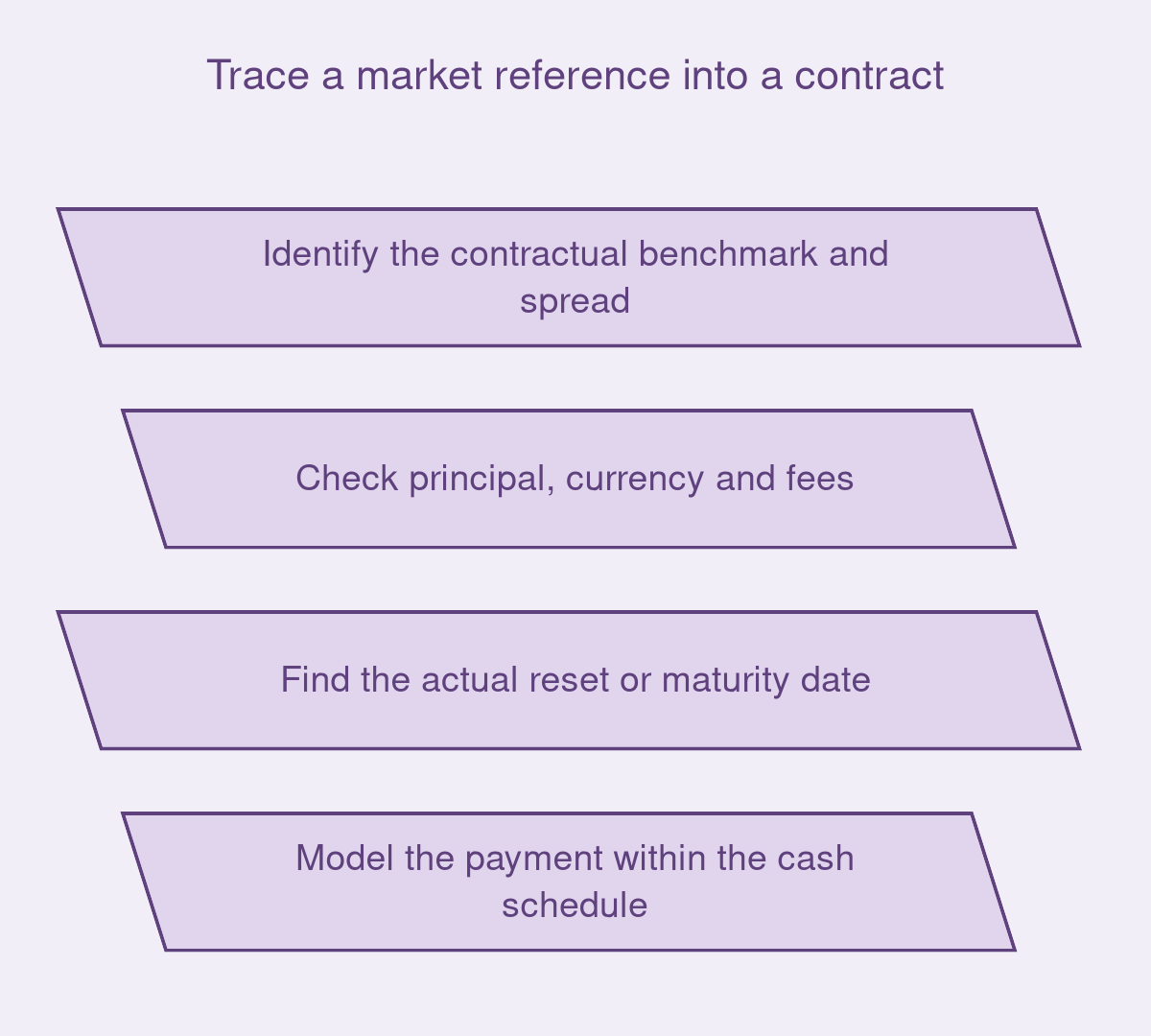
A business borrowing rate includes more than its market reference. Currency, maturity, collateral, credit spread and fees can change the total cost. Floating-rate facilities also follow their actual contractual benchmarks, which need not be a ten-year Treasury yield. Fixed coupons can remain unchanged while future refinancing assumptions become less favourable. The source therefore recommends identifying reset dates and maturities before applying a market scenario to current-period expense.
Financing reaches operations through several channels. Inventory funding can become more expensive, suppliers can alter payment terms and investors can require a higher return from uncertain future cash flows. These mechanisms do not necessarily move together or affect every sector equally. A project with construction spending before revenue differs from a short working-capital cycle. Customer budgets and currency exposure can matter even to a service business with little physical borrowing.
The article argues for separating financing changes from operating revisions before combining them. A delay can move receipts, extend overheads and alter drawdown dates; increasing the rate on an unchanged schedule is another sensitivity. Keeping both traceable helps avoid double-counting one problem or hiding a monthly funding gap inside an acceptable annual total. Staged commitments can create evidence about demand and readiness before the largest payment becomes irreversible, without implying that all investment should stop when yields rise.
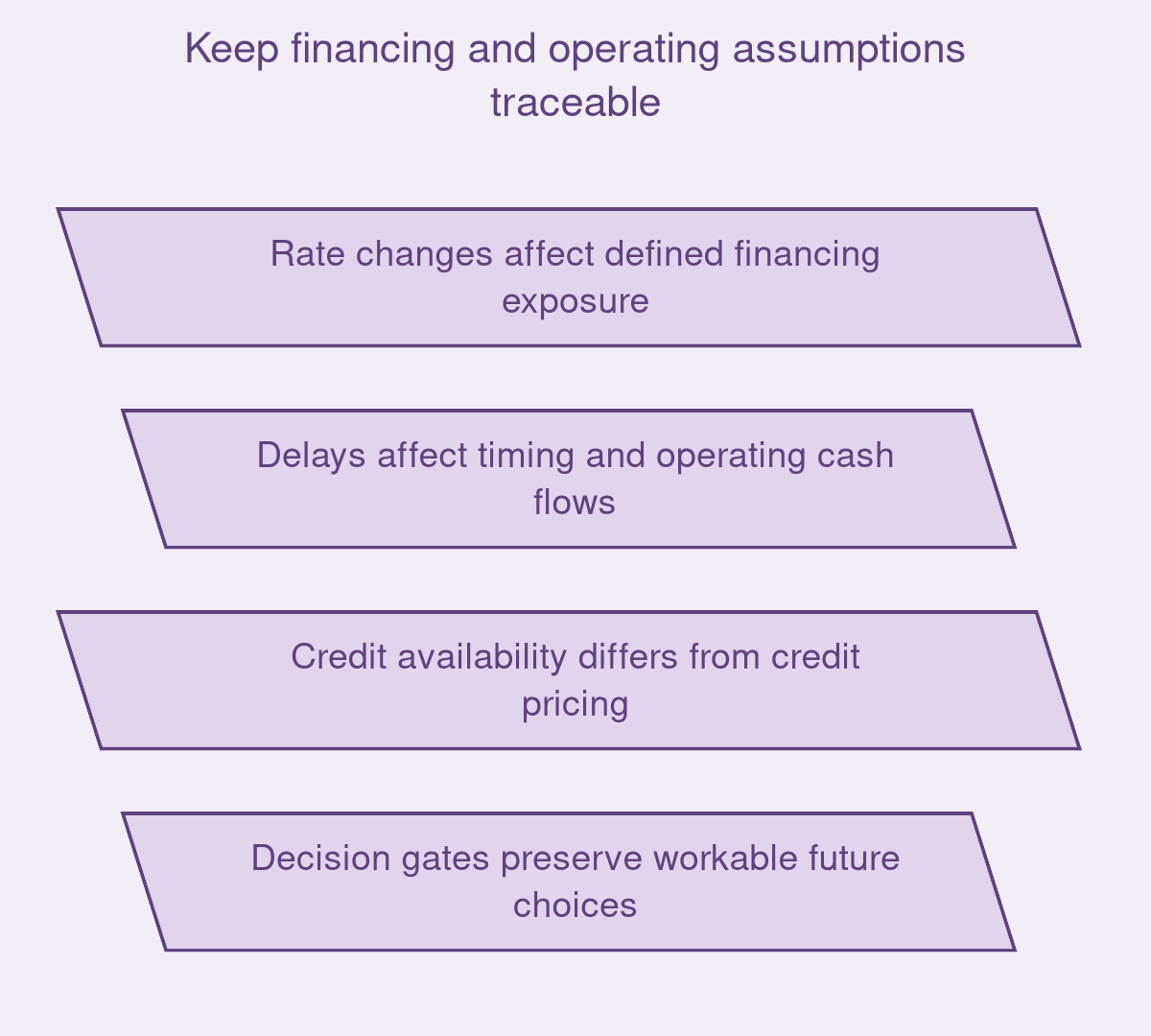
Liquidity and capital availability complete the assessment. An undrawn facility differs from cash already borrowed, and cash reserved for essential obligations is not freely available simply because it earns interest. A higher offered price of credit is also different from a lender withdrawing capacity. The source proposes a compact contract register, stress cases, named owners and decision dates. Its useful conclusion is a translation discipline: preserve the market observation, establish the company exposure and state the management response separately. That makes a yield headline a prompt for better questions rather than an unsupported verdict about a company’s next investment or financial result.


Comments
Post a Comment