Japan’s monetary normalisation: structural questions and page analysis
Webpage checker · todayuktimes.com
Japan’s monetary normalisation: structural questions and page analysis
Visit todayuktimes.comRead the original long read ↗
A review of the source’s argument about wages, consumption, productivity and the limits of monetary change.
Live HTML checked 16 October 2026 · HTTP 200 · English long read
HTML inspection
Page characteristics
Observed from the fetched public HTML. Counts cover the whole document unless labelled otherwise; article word count includes text within the first article element. These are page characteristics, not a ranking or performance score.
| HTTP status | 200 |
|---|---|
| Final response URL | https://todayuktimes.com/analysis/boj-monetary-normalization-deflation-exit-2026/ |
| Title tag | Japan's Monetary Revolution: What the BOJ's March from Negative Rates to 1.25% Reveals About the End of Deflation — Today UK Times |
| Title length | 130 characters |
| Meta description | Between March 2024 and September 2026 the Bank of Japan took its policy rate from -0.1% to 1.25% — the highest since 1995 — completing the most significant monetary normalisation by any advanced-economy central bank in three decades. The journey reveals both the genuine achievement of exiting deflation and the structural fragilities that persist: an economy growing at just 1% outside semiconductor booms, a workforce shrinking by 800,000 per year, and a productivity problem that no interest rate can solve. |
| Description length | 510 characters |
| HTML language | en |
| Canonical URL | https://todayuktimes.com/analysis/boj-monetary-normalization-deflation-exit-2026/ |
| Meta robots | Not declared |
| Viewport | width=device-width, initial-scale=1 |
| Heading counts | H1: 1 · H2: 14 · H3: 6 · H4: 0 · H5: 0 · H6: 0 |
| H1 text | Japan's Monetary Revolution: What the BOJ's March from Negative Rates to 1.25% Reveals About the End of Deflation |
| Article element word count | 2,270 words |
| Whole-page image elements | 21 |
| Images with non-empty alt text | 21 |
| Whole-page links | 38 |
| External link elements | 12 |
| Response HTML size | 32,833 bytes (UTF-8 snapshot) |

Article overview
Leaving an extended period of very low interest rates raises questions beyond the next central-bank decision. Today UK Times explores those questions through a September 2026 account of Japanese monetary normalisation. The source presents a narrative in which stronger wages and more persistent price increases permit a change in policy, while weak underlying growth remains unresolved. This summary concentrates on that analytical framework. The article’s detailed rate path and statistical assertions are source claims, not independently verified current monetary data supplied by this review.
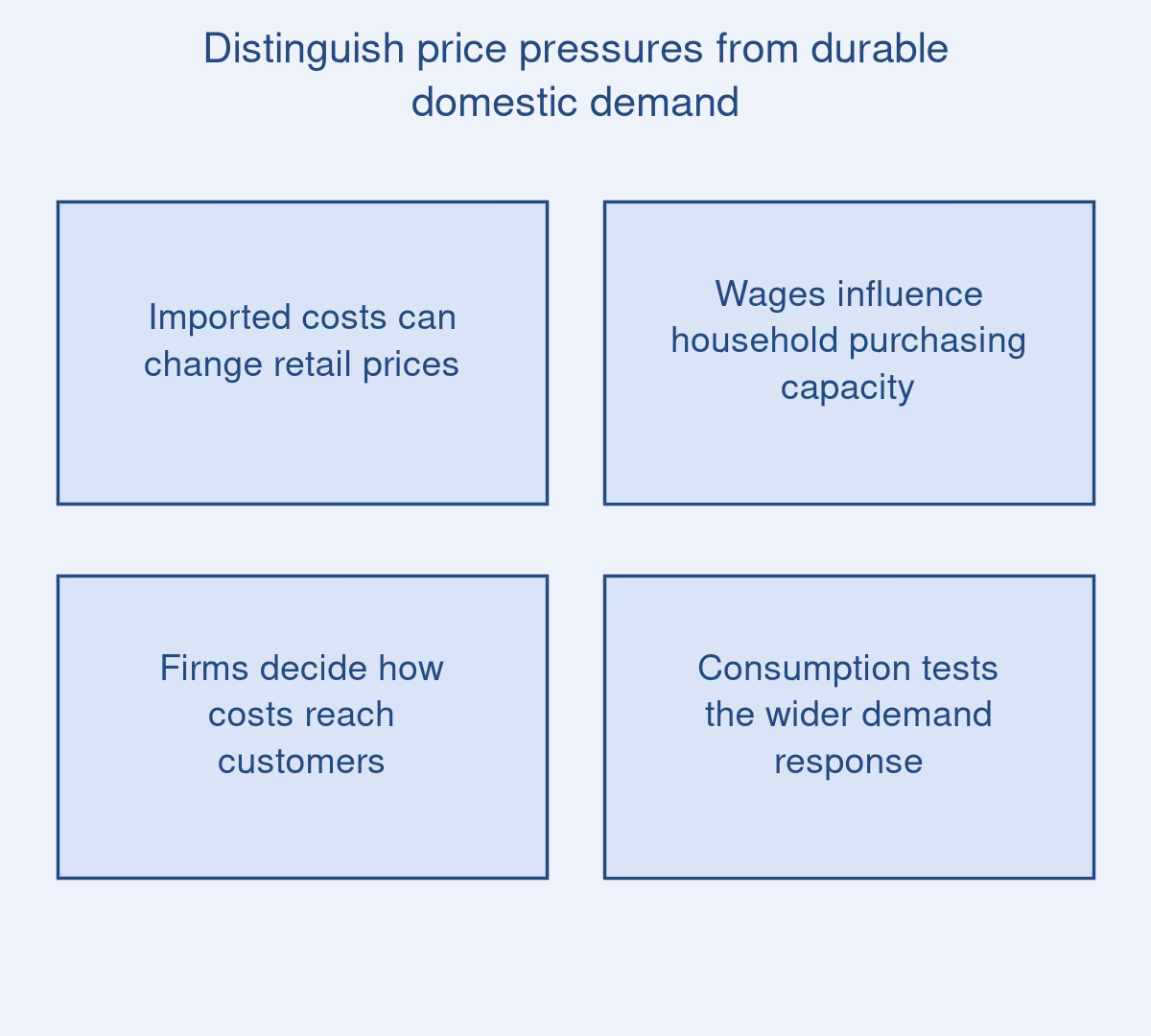
The first distinction concerns the origin of inflation. Imported energy and food costs can raise prices without demonstrating stronger domestic demand. Wage settlements and firms’ decisions to pass costs to customers may create a different pattern. The article argues that policymakers need to understand whether those domestic interactions can persist when external pressures change. A lower commodity price or a different exchange rate could alter the picture, so a temporary increase in a price index is not sufficient to establish a durable change in behaviour.
Growth introduces a separate test. A successful move away from deflation does not automatically improve productivity or broaden the sources of expansion. The source discusses semiconductor investment alongside less dynamic services and household demand. The relevant comparison is between strength in a particular sector and performance across the economy. A highly productive industry can contribute to output while employing only a limited share of workers, leaving other businesses with different constraints and investment needs.
Demographics and fiscal commitments extend the horizon. A changing workforce can influence both labour availability and consumption. Higher borrowing costs also reach public finances gradually as debt matures and is refinanced. These mechanisms operate over different periods, making an immediate comparison between one policy move and the entire debt stock misleading. The article additionally discusses financial institutions, for which improved returns on new lending may coexist with changes in the value of older bond holdings.

The source’s broader conclusion is that monetary normalisation and structural renewal are related but distinct achievements. Businesses still need viable projects, adaptable operations and customers able to buy their output. Governments face questions about productivity, skills and investment that cannot be answered solely by adjusting a policy rate. Read as a review of the author’s argument, the long read is useful for organising those relationships. Its figures and claimed outcomes require their own verification before being used as a factual rate chronology, a forecast or a basis for a financial decision.


Comments
Post a Comment